Friday, December 30, 2011


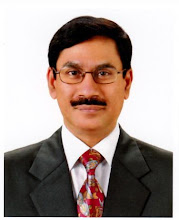
New Head of the Bangladesh Law Team at IPG Legal

The IPG is proud to announce the appointment of Mr. Mohammad Ali Akanda as the new Chair of the Bangladesh Practice Team.  The Bangladesh Practice team is engaged by international enterprises for market entry, M & A, partnership dispute, project financing, corporate and compliance and general business transactions throughout Bangladesh.

Prior to the private practice of law, Mr. Akanda served as the Deputy Attorney General of Bangladesh.  He was often noted by the papers as being a diligent and fair advocate for the government.

Mr. Akanda graduated, with honors, from the prestigious Dhaka University with a LL.B and LL.M. 

Mr. Akanda is a member of the Bangladesh Bar Council and is, also, admitted to the High Court and Appellate Division of the Bangladesh Supreme Court. 

Sean Hayes, a partner at IPG, met Mr. Akanda when Mr. Akanda was on an official tour to the Constitutional Court of Korea.   Both Mr. Hayes and Mr. Akanda, at the time, were both government officials.   We are proud that this impromptu meeting has lead to a lasting friendship and now a professional relationship.

IPG attorneys and business professionals are proud to be some of the world's most experienced professionals focused on the practice of law in Asia. Our boutique mid-size law firm, through our local connections, six global offices, a cutting-edge case management system and real on-the-ground Asia experience, has garnered a reputation for providing effective and efficient legal solutions in some of the most complex international business matters.

We are engaged in projects in Bangladesh, Cambodia, China, Korea, Laos, Myanmar (Burma), Vietnam and the United States through the China Practice Team; Dispute Resolution & Litigation Practice Team; Korea Practice Team; U.S. Immigration Team; U.S. Investment & Corporate Law Team; and Southeast Asia Practice Team.

We work with both Fortune 500 companies and SMEs and are proud of our proactive and cost-effective approach to our business consulting and legal practice.

info@ipglegal.com
Copyright (c) 2008-2011. IPG Legal. All Rights Reserved. Powered by Blogger.

IMF Statement on Bangladesh Needed Reforms

The following is a press release by the IMF. For the good of the people of Bangladesh, hopefully, the issues reflected in the following statement by the IMF Mission to Bangladesh will be accomplished by the government.

Bangladesh is a wonderful country to live and do business in, because of its vibrant and dedicated population and rich and proud history. However, deep government and systematic problems has allowed the country to fester in poverty. The size of the population (160 million) should allow the nation to be on par in GDP per capita with neighboring nations including Thailand, Vietnam and India.

The IMF is not always correct, but the basic issues facing Bangladesh are well-known and have not been properly addressed for decades. Hopefully, the government has the power to get the system in order to allow the middle-class to grow and thus fuel a vibrant economy with the assistance of experienced Bangladesh and foreign businesses fueling the export, service and resources industries.
___
An International Monetary Fund (IMF) mission visited Dhaka during November 30–December 13, 2011 to discuss a reform program with the government of Bangladesh for possible support under the IMF’s Extended Credit Facility (ECF).

The mission met with the Honorable Prime Minister Sheikh Hasina, her economic and energy advisors, the Minister of Finance, Finance Secretary, Bangladesh Bank Governor, and other senior officials, as well as private sector, development partner, and civil society representatives.

Discussions centered on near-term macroeconomic policy priorities and growth-critical structural reforms, which could form the basis for a program arrangement under the ECF.

The mission noted that well-coordinated policy adjustments were needed to mitigate balance of payments, fiscal, and inflation pressures and contain macro-financial risks faced by Bangladesh. It stressed the need for forceful policy actions on both the macroeconomic and structural fronts in light of a recent weakening in the global economic environment, rapid rise in oil imports and subsidy costs, and a pronounced increase in government borrowing from the banking system.

In this context, agreement was sought on a range of measures needed to reduce external and domestic imbalances, restore macroeconomic stability, and rebuild foreign reserve buffers. Discussions focused on policy moves to engender moderate monetary and fiscal tightening, backed by greater exchange rate and interest rate flexibility. In keeping with the government’s reform plans, commitments were also sought on more deep-seated measures needed to bring lasting adjustment, mainly to tax policy and administration, public financial management, financial sector oversight, and the trade and investment regime.

A finalization of program understandings awaits further consultation among officials and with the IMF over the near term to ensure timely implementation of envisaged policy adjustments.

Setting Up a Manufacturing/Textile Plant in Bangladesh Through a Joint Venture: Top Ten Things to do Before You Go

Bangladesh is one of the world's largest exporters of textile/garments, rice, jute, potato, pineapple, mango, onion, banana, tea and tropical fruit. The nation, also, has a growing middle-class with an increasing appetite for western products.  The nation is, also, a oil and natural gas producing nation with the resources, mainly, being developed by foreign companies.

To date, most foreign companies operating in Bangladesh are from other South Asian countries and India, but more Western companies are finding the growing middle-class a great market and the low-cost and highly-skilled labor an opportunity for companies that are being squeezed for margins because of the increased labor costs in China, Vietnam, India and Thailand.

The IPG assists mainly American, Australian, British, Canadian, Korean and Chinese companies to enter the Bangladesh market either through JVs, OEM agreements or as 100% foreign-invested enterprise. The following advise is related, solely, to manufacturing in Bangladesh as a JV.  Please take the list as the beginning of your due diligence on doing business in Bangladesh.

Top Ten Musts Before Starting a Manufacturing/Garment Industry in Bangladesh
  • Register all intellectual property including your trademarks and patents in Bangladesh.   Your E.U., U.S., Indian, Japanese etc. registrations are not enough to protect your IP in Bangladesh;
  • Due Diligence, Due Diligence, and More Due Diligence. Read our many posts on this issue;
  • Put systems in place to protect trade secrets;
  • Complete a decent feasibility study. This does not mean simply running a cost estimate;
  • Consult a technical adviser;
  • Checkout and go through IPG's Stock Purchase/JV Due Diligence Check List;
  • Meet the anticipated JV partner many times and learn about the partner. A discussion on the phone is not enough either is a meeting over dinner. Have a local help with feeling the person out;
  • Execute a Non-Disclosure Agreement (NDA).  Have this done by someone who does business in Bangladesh not you lawyer in Hong Kong, the states or the U.K.; and
  • Execute OEM, Manufacturing, JV, Supplier, Shareholder Agreements as the case may be.  Don’t get them drafted by hacks or those who don't have experience in Bangladesh. No, the lawyer you use in NY is not good enough.
__________
SeanHayes@ipglegal.com
IPG is engaged in projects for companies and entrepreneurs doing business in Bangladesh, Cambodia, China, Korea, Laos, Myanmar, Vietnam and the U.S. www.ipglegal.com

Hiring a Defense Attorney in Korea

In all cases, in Korea, where you are accused of a crime and you fear that you may be sentenced to time in jail, may be deported or the conviction may harm your future, hire, quickly, an experienced and proactive Korean criminal attorney prior to any interrogations by the Korean police or prosecution.

Sadly, few lawyers, in Korea, are useful for criminal matters, since few lawyers are proactive when it comes to matters concerning the Korean government, experienced in criminal matters for foreigners or willing to upset the status quo (aggressively engage the prosecutor).

Please do your future a favor,  forgo any options provided at no or low cost unless you have no other options.

If you can't afford an attorney, the court, normally will appoint an attorney to assist you.  In most cases, the appointment of the Korean government-appointed attorney will be useless for your defense/sentence, since the appointment will be after interrogations, after the decision of the prosecutor to indict and often is an attorney that will only be going through the basic processes necessary for him to complete the matter and go on to the dozens of other matters that he has in front of him.

If you are in the U.S. military, the military will appoint you an attorney.  Also, the attorney will be appointed too late in the investigation stage.   The attorney appointed, overwhelmingly, in the cases that I have seen will simply going through the motions.

The handful of attorneys picked by the military are some of the least proactive attorneys I have seen in Korea and want, in the majority of the cases, to simply be on the good graces of their bread-and-butter (a Korean employee of the U.S. military).  If you are convicted of a crime, you will be discharged from the military.   This was not true a decade ago, but the military, even for "minor" violations of law have been quick to discharge soldiers.

Signs that you May Have Hired the Wrong Korean Lawyer
  • Your Korean lawyer is not operating based on a contingency fee (success fee: not guilty/no time served in jail etc.).   The best arrangement is a discounted hourly fee combined with a success fee, since you will receive a bill noting what the attorney is doing and the attorney will be motivated to do work on the matter even when the chance of "success" is slim.
  • Your Korean lawyer is too young (Early 30s) or too old (70s).  The lawyer will, likely, not have the experience necessary to handle the matter or will, simply, not be handling the matter.
  • Your Korean lawyer is directing you, consistently, to talk with a less experienced lawyer.  The less experienced lawyer is likely, only, doing the work and the more experienced lawyer is simply a rainmaker.
  • Your Korean lawyer has poor English language skills.  Without someone fluent in English, you run the risk of never getting your side of the story heard. 
  • Your Korean lawyer has few non-Korean clients.  Handling criminal matters for foreigners is vastly different than handling a typical criminal matter for a Korean.  Often, deals can be obtained with the prosecutor in non-violent crimes for foreigners, that are unavailable to Koreans.  Also, violent and public crimes, often, need to be handled with a decree of media and cultural savvy, since judges and prosecutors are heavily affected when the victim is a Korean and the perpetrator of the crime is a foreigner. 
  • Your lawyer never speaks.  A lawyer that never speaks is, typically, not a proactive lawyer.  Criminal cases are best handled with strategy and a proactive counsel willing to engage the police investigators, prosecutor and judge.  If your lawyer won't speak to you, he won't be speaking to anyone else and will likely simply go through the process, receive a guilty verdict and the typical sentence.
  • Your lawyer seems not to be listening.  Too often, lawyers, ignore clients.  Great defense lawyers  in Korea develop great defenses by listening and responding to clients.  If you have a lawyer that is not listening, he will likely just go through the process, receive a guilty verdict and the typical sentence.
  • Your lawyer in Korea has too many cases.  If he seems too busy he probably is too busy.  Criminal cases, often, need a great deal of time.  If the lawyer is not able to spend the time to talk with you, you may never be able to get the attorney to provide the time necessary to handle the matter.
  • Your lawyer in Korea hates you.  Koreans are passionate people.  If the lawyer hates you, he will likely take your money and do nothing for you.    Passion, too often, can lead Korean lawyers to be less than reasonable.   As we know, this is not only a Korean trait.
Related Articles 

What do you think?

_________
SeanHayes@ipglegal.com
NY attorney Sean Hayes is the only non-Korean to work as a government attorney for the Korean court system.  He leads the Korea Practice Team at IPG.